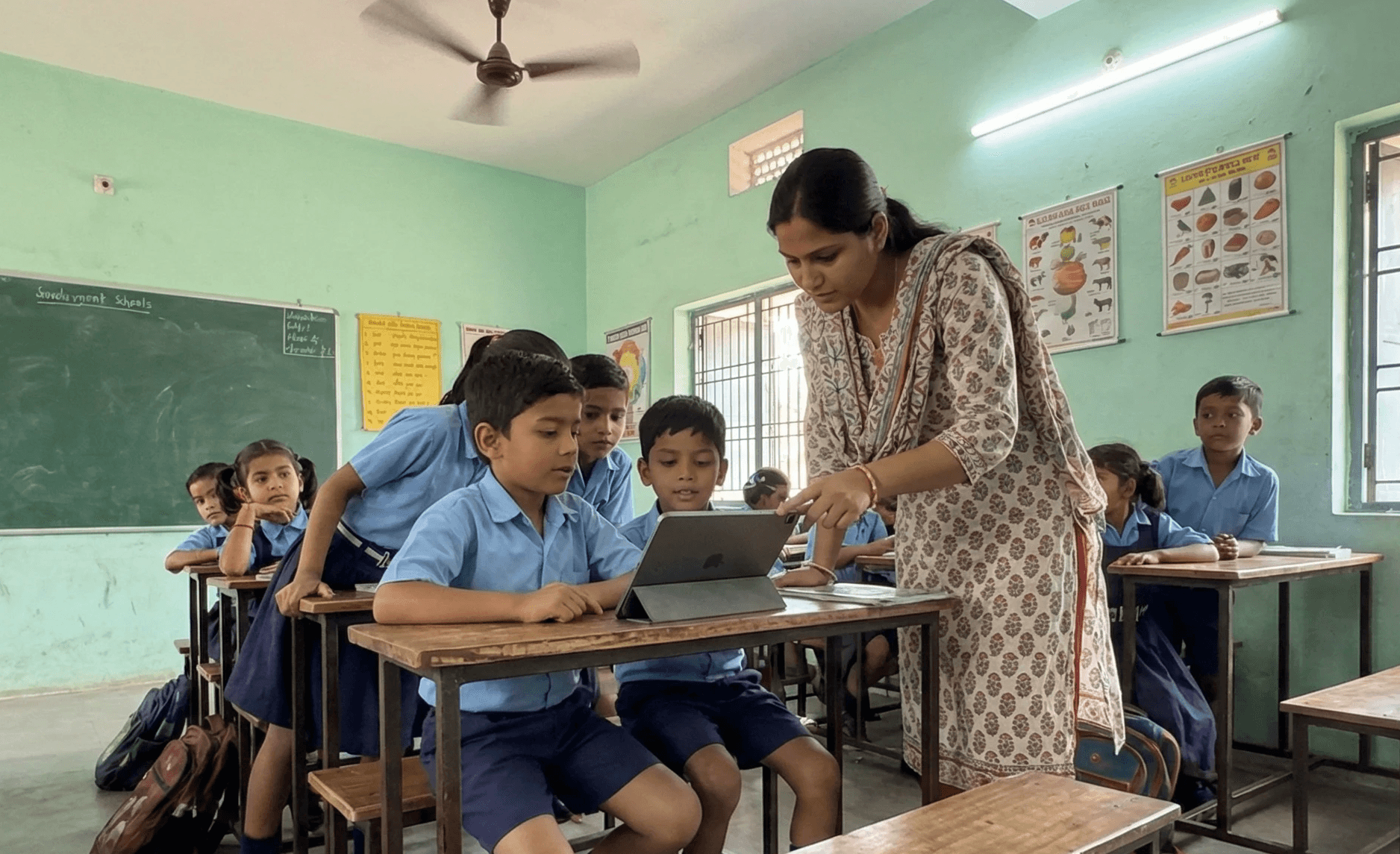
From Observation to Action: Teaching Every Child Effectively
Teachers and Educators
Identify developmental profiles during regular classroom activities, access evidence-based differentiation strategies, and create truly inclusive learning environments where every student's needs are understood and supported.
You notice. You care. Now get the tools to truly help.
In your classroom, you see it daily. Ravi struggles to hold a pencil while his peers write easily. Priya speaks in two-word phrases when others tell elaborate stories. Arjun can't sit still for circle time. Meera melts down over unexpected changes. You know these children need something different, but what exactly? And how do you provide individualized support while teaching 30+ students?
Traditional approaches tell you to "refer for assessment," but waiting lists are months long, families can't afford private evaluations, and even when diagnoses come, they rarely include practical classroom strategies. You're left guessing, trying random interventions, feeling inadequate when they don't work.
Developmental Understanding During Daily Activities
Jiveesha transforms your observational skills into clinical-grade insights:
Observation-based screening tools embedded in everyday classroom routines—story time, play, art activities, transitions
15-minute assessment protocols that don't disrupt your teaching schedule
Multi-domain evaluation covering motor skills, language, cognition, social-emotional, behavior, sensory processing
Video reference guides showing what to look for during assessments
Mobile app allowing screening during regular activities without special setup
Immediate preliminary results flagging areas needing attention
From Diagnosis to Daily Practice
Understanding the "what" is only half the battle. Jiveesha bridges assessment to intervention:
Developmental Profile Translation:
Plain language reports explaining what screening results mean for classroom learning
Strength identification highlighting how each child learns best
Challenge areas explained with developmental rather than deficit language
Functional impact analysis - how does this affect reading, math, peer interaction, independence?
Progression indicators showing what skills typically develop next
Classroom Differentiation Strategies:
Specific accommodation recommendations for each developmental profile
Universal Design for Learning (UDL) applications benefiting all students while supporting specific needs
Tiered instruction guidance for small group work matching developmental levels
Environmental modifications for sensory, attention, or emotional regulation challenges
Assistive tool suggestions from low-tech to high-tech options
Peer support strategies building inclusive classroom culture
Individualized Education Plan (IEP) Support
When formal special education is needed, you're prepared:
IEP goal suggestion bank aligned with developmental screening results
Present Level of Performance (PLOP) data generated from screening
Measurable objective templates for tracking progress
Accommodation and modification recommendations based on evidence
Progress monitoring tools showing if interventions are working
Parent communication templates explaining goals and strategies
Content Area Adaptations
Apply developmental understanding across your curriculum:
Literacy Instruction:
Children with language delays: multi-sensory phonics, visual supports, extended processing time
Fine motor challenges: adapted writing tools, keyboarding, verbal responses
Attention difficulties: shorter texts, movement breaks, interest-based reading
Mathematics:
Visual-spatial strengths: manipulatives, drawing, visual representations
Working memory challenges: step-by-step guides, calculator use, formula sheets
Abstract reasoning delays: concrete-representational-abstract progression
Social Studies & Science:
Language comprehension issues: visual timelines, graphic organizers, hands-on experiments
Reading challenges: videos, discussions, project-based learning
Executive function needs: structured inquiry, checklists, scaffolded research
Behavior Management with Developmental Lens
Understand behavior as communication of unmet needs:
Function-based analysis - is this behavior sensory-seeking, escape-motivated, attention-seeking?
Proactive strategies addressing underlying developmental needs before behaviors escalate
Positive behavior support plans teaching replacement skills
Self-regulation tools for children with emotional dysregulation
Environmental trigger identification and modification
De-escalation techniques for crisis moments
Collaborative Problem-Solving
You're not alone in supporting complex learners:
Case consultation prompts helping you think through challenging situations
Multi-disciplinary team coordination with special educators, therapists, counselors
Progress review protocols for data-driven decision making
Parent partnership strategies for home-school consistency
Community resource connections when additional support is needed
Professional Development Pathways
Build expertise that transforms your career:
Foundational Modules:
Understanding typical developmental milestones and variations
Recognizing red flags across developmental domains
Creating inclusive classroom environments
Differentiating instruction for diverse learners
Advanced Topics:
Supporting specific conditions (autism spectrum, ADHD, learning disabilities, speech-language disorders)
Trauma-informed teaching practices
Advanced behavior support strategies
Assessment and progress monitoring
Micro-credentials:
Earn certifications in specialized areas of inclusive education
Build professional portfolio of differentiated instruction strategies
Document impact through student outcome data
Advance career opportunities in special and inclusive education
Classroom Success Monitoring
Track your growth as an inclusive educator:
Student progress dashboards showing developmental gains over time
Intervention effectiveness metrics - which strategies work best for which profiles?
Teaching practice reflections guided by screening data
Student engagement indicators in children with developmental needs
Family satisfaction feedback on communication and collaboration
Peer learning community sharing successful strategies
Real Classroom Scenarios & Solutions
Scenario 1: The Overwhelmed Writer Student Profile: Fine motor delay, strong verbal skills Observation: Avoids writing tasks, behavior problems during writing time Jiveesha Insights: Screening shows 18-month fine motor delay Action Plan: Oral responses, scribe support, keyboarding instruction, occupational therapy referral Outcome: Behavioral issues resolve, writing skills improve with appropriate support
Scenario 2: The Social Outsider Student Profile: Age-appropriate academics, social communication challenges Observation: Plays alone, misses social cues, literal interpretation of language Jiveesha Insights: Social-emotional domain shows pragmatic language concerns Action Plan: Social stories, structured peer interaction, explicit social skills teaching, speech therapy referral Outcome: Gradual increase in peer interaction, fewer social conflicts
Scenario 3: The Inconsistent Learner Student Profile: Highly variable performance day-to-day Observation: Some days can do complex tasks, other days can't complete simple ones Jiveesha Insights: Screening shows attention regulation and sensory processing variations Action Plan: Flexible seating, movement breaks, sensory tools, predictable routines Outcome: More consistent engagement, reduced frustration
Why Teachers Choose Jiveesha
Teaching is about reaching every child, not just the easy-to-teach ones. Jiveesha gives you:
Confidence knowing your observations are backed by validated screening
Clarity understanding why students struggle and what specifically to do
Efficiency with ready-to-use strategies instead of trial-and-error
Advocacy with data supporting requests for additional resources
Growth professionally as you master inclusive teaching practices
Impact seeing struggling students finally succeed
Because you became a teacher to make a difference for all children—and you deserve tools that help you do exactly that. Every child in your classroom has potential. Jiveesha helps you unlock it.