Every Child Screened. Every Need Identified.
Schools
Transform your institution into a model of inclusive education with seamless neurodevelopmental screening, government-integrated reporting, and comprehensive capacity building—aligned with Samagra Shiksha Abhiyan and NEP 2020.
Inclusive education is your mandate. We make it your reality.
Your school or anganwadi serves hundreds of children, each with unique developmental needs. Some struggle with learning, others with behavior, some with communication or social skills. You know these children need support, but identifying who needs what—and accessing resources to help them—feels impossible with current constraints.
Traditional screening requires specialized professionals you don't have. Developmental assessments are expensive and time-consuming. Many children slip through the cracks until problems become severe. Meanwhile, NEP 2020 mandates inclusive education, and Samagra Shiksha Abhiyan expects early identification and intervention—but how?
Seamless Institutional Integration
Jiveesha integrates into your existing operations without disrupting workflows:
Bulk screening capabilities for entire classrooms, age cohorts, or your complete institution
Tablet/mobile-based platform that works in low-connectivity environments
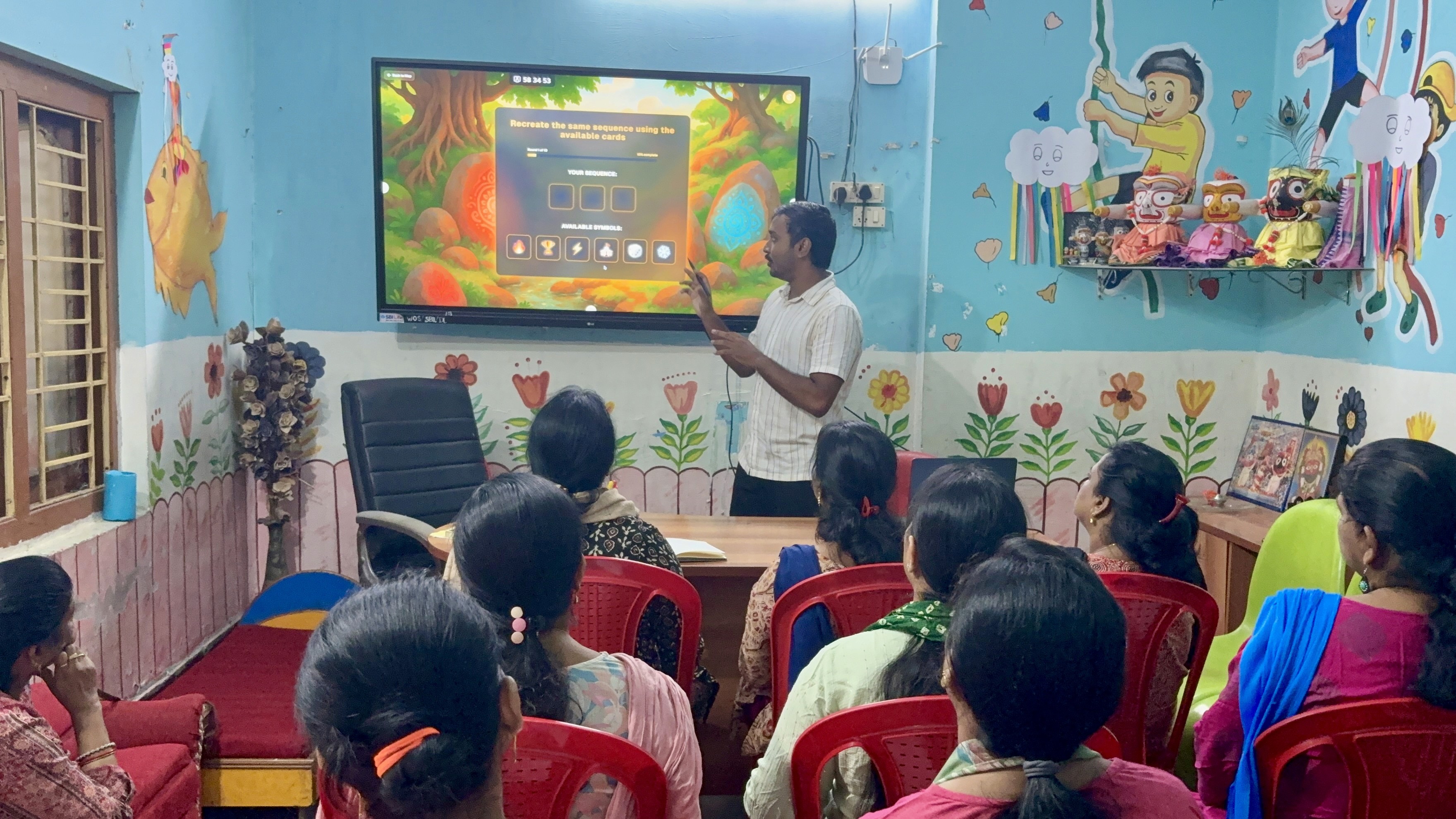
15-20 minute screening per child conducted by your existing staff during regular activities
Automated data sync with UDISE+ and Samagra Shiksha Abhiyan MIS systems
Multi-language support including regional languages for diverse communities
Offline functionality with cloud sync when connectivity returns
Staff Empowerment Without Specialized Training
Your teachers and anganwadi workers become screening experts:
Simple, guided assessment protocols with clear instructions and visual aids
No medical/clinical training required - designed for educators, not clinicians
Video tutorials and job aids in regional languages
Real-time guidance within the app during screening
Quality assurance checks ensuring data accuracy and reliability
Ongoing support hotline for questions during implementation
Comprehensive Child-Level Intelligence
Move beyond "pass/fail" to understand each child completely:
Individual developmental profiles across eight domains for every screened child
Severity classification (typical, at-risk, significant concern) for prioritization
Specific need identification - does this child need speech therapy, occupational therapy, special education, medical evaluation?
Classroom accommodation recommendations you can implement immediately
Referral readiness with complete documentation when specialist support is needed
Longitudinal tracking showing how each child progresses over time
Institutional Dashboard & Reporting
Make data-driven decisions about resource allocation and program effectiveness:
School-level analytics showing screening coverage, identification rates, intervention status
Cohort comparisons by age, classroom, socioeconomic background
Early identification metrics tracking how quickly needs are detected
Intervention outcome tracking measuring effectiveness of support provided
Government reporting exports formatted for UDISE+, SSA, and district authorities
Trend analysis identifying patterns requiring institutional policy changes
Government Program Integration
Fulfill your mandates efficiently and document your impact:
NEP 2020 Foundational Literacy & Numeracy alignment with screening tied to learning outcomes
Samagra Shiksha Abhiyan component integration for inclusive education budgets and reporting
UDISE+ data compatibility for annual school reporting
Baal Aadhaar/Aadhaar linking for unique child identification
PENCIL portal integration for tracking out-of-school children
District Resource Center collaboration for referral pathways and training support
Inclusive Education Action Planning
Transform screening data into concrete action:
School Inclusion Plans generated automatically based on screening results
Resource requirement forecasting - how many children need speech therapy, special educators, etc.?
Teacher training needs analysis identifying skill gaps in your staff
Infrastructure adaptation recommendations for learning environments
Parent engagement protocols communicating findings and partnering in support
Community resource mapping connecting with local healthcare and therapy providers
Capacity Building Ecosystem
Build lasting inclusive education capabilities:
Teacher professional development modules on understanding developmental diversity
Classroom differentiation strategies for mixed-ability learning environments
IEP (Individual Education Plan) development training for creating effective support plans
Behavior management techniques for children with attention and self-regulation challenges
Parent counseling guidance for sensitive communication about developmental concerns
Resource library with activity guides, intervention strategies, success stories
Monitoring & Continuous Improvement
Track implementation quality and child outcomes:
Screening coverage monitoring ensuring no child is missed
Follow-up compliance tracking for identified children receiving interventions
Intervention effectiveness measures showing what's working
Teacher engagement analytics identifying who needs additional support or recognition
Parent participation rates in follow-up and intervention plans
Success story documentation for advocacy and funding
From Policy to Practice: Your Implementation Journey
Phase 1 (Week 1-2): Staff orientation, platform training, pilot screening with one classroom
Phase 2 (Week 3-6): Institutional rollout, all children screened, initial reporting
Phase 3 (Month 2-3): Intervention planning, teacher training on accommodations, parent engagement
Phase 4 (Ongoing): Quarterly re-screening, progress monitoring, continuous capacity building
Why Schools & Anganwadis Choose Jiveesha
Inclusive education isn't just about access—it's about ensuring every child gets the support they need to learn and thrive. Jiveesha gives you:
Compliance with government mandates backed by documentation
Early action preventing small delays from becoming major disabilities
Resource optimization knowing exactly where to focus limited special education resources
Teacher confidence working with diverse learners effectively
Family partnerships with data to support home-school collaboration
Evidence of impact showing how your institution transforms lives
Because every child who walks through your doors deserves to be seen, understood, and supported in reaching their potential. And you deserve the tools to make that happen.